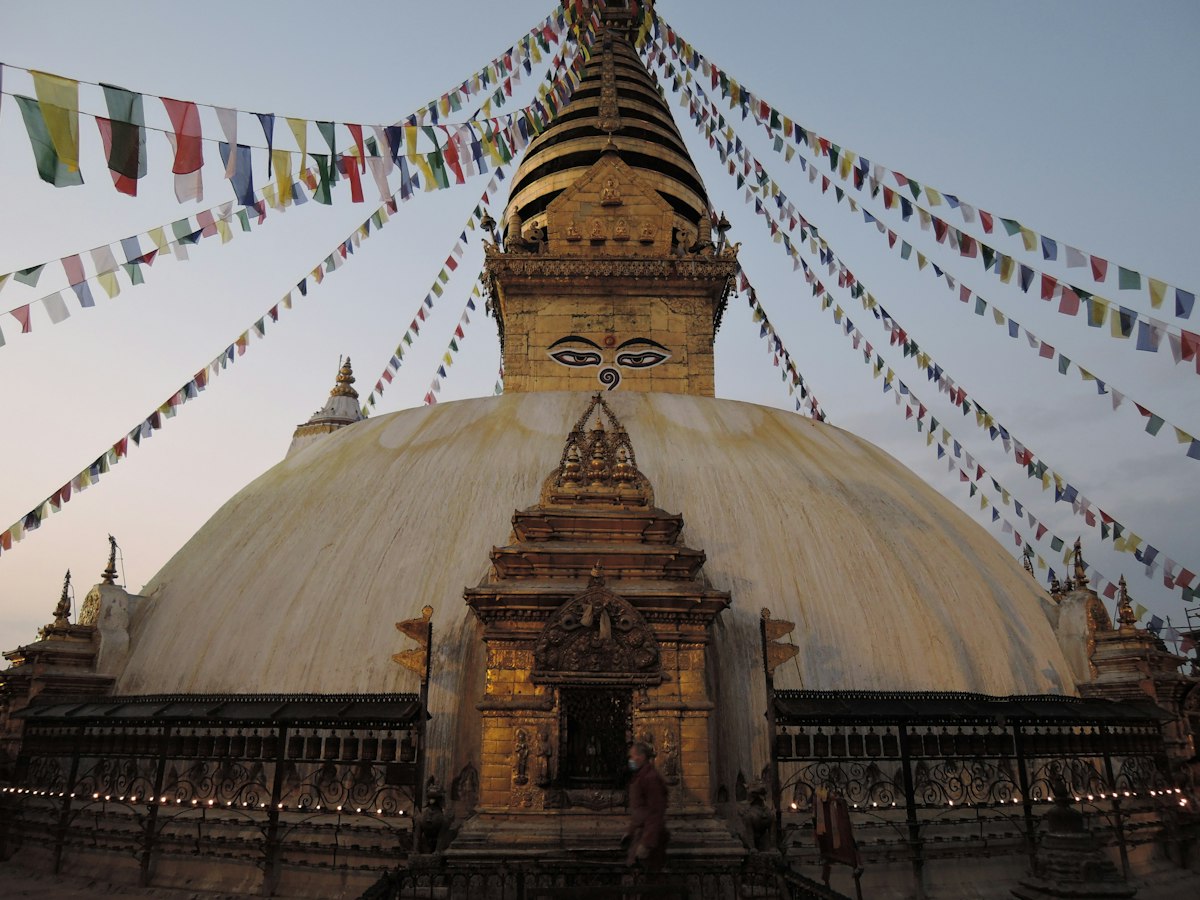
Bhaktapur is a 13th-century Newari city located just 13 kilometres east of Kathmandu, making it the perfect day trip from the capital. Known as the "City of Devotees" (Bhaktapur literally means "Place of Devotees"), it is the best-preserved of the three ancient royal cities in the Kathmandu Valley and home to some of Nepal's finest examples of pagoda architecture, woodcarving, and pottery traditions. A full day in Bhaktapur lets you explore Durbar Square, the Pottery Square, Dattatreya Square, and sample the city's famous juju dhau (king curd) — all for a single entry fee of NPR 1,800 for foreign visitors.
What Makes Bhaktapur Different From Kathmandu and Patan?
Bhaktapur stands apart from its sister cities in the Kathmandu Valley in several important ways. Unlike Kathmandu, which has grown into a sprawling modern metropolis, Bhaktapur has maintained strict building codes that preserve its medieval character. Motorbikes and cars are restricted in the core heritage zone, keeping the old city remarkably pedestrian-friendly and peaceful.
The city was the capital of the greater Malla kingdom before it split into three rival kingdoms in the 15th century, and the Bhaktapur Mallas channelled their wealth into building temples that would outshine their Kathmandu and Patan rivals. The result is an extraordinary concentration of architectural masterpieces:
- Nyatapola Temple — Nepal's tallest pagoda temple at 30 metres, with five tiers of guardian statues on its steep stairway
- 55 Window Palace — A masterpiece of Newari woodcarving with 55 intricately carved windows on a single facade
- Vatsala Temple — Houses the famous "barking bell" whose ring allegedly silences dogs in the area
- Dattatreya Temple — Reputedly carved from a single sal tree trunk
- Peacock Window — Nepal's most famous piece of woodcarving, a lace-like window in the shape of a peacock's tail
Bhaktapur also suffered less earthquake damage in 2015 than Kathmandu, and its reconstruction has been more faithful to original designs. Many temples that collapsed have been rebuilt using traditional methods and materials, maintaining architectural authenticity.
How Do You Get to Bhaktapur From Kathmandu?
Getting to Bhaktapur from central Kathmandu is straightforward and inexpensive.
By Local Bus
The cheapest option. Buses and microbuses to Bhaktapur depart frequently from Ratna Park and Bagh Bazaar in Kathmandu. The journey takes 30-50 minutes depending on traffic. Cost: NPR 30-50.
By Taxi
A taxi from Thamel or central Kathmandu to Bhaktapur Durbar Square costs NPR 1,000-1,500 one way. Agree on the fare before departure. The ride takes 30-45 minutes.
By Ride-Share (Pathao/InDrive)
App-based ride services are cheaper than traditional taxis. A Pathao or InDrive ride from Thamel to Bhaktapur typically costs NPR 600-900.
By Rental Scooter or Motorcycle
A popular option for independent travellers. Scooter rentals in Thamel cost NPR 800-1,200 per day. The road to Bhaktapur via the Arniko Highway is well-paved.
By Bicycle
For the adventurous, cycling from Kathmandu to Bhaktapur takes 1-1.5 hours along the Arniko Highway. The route is mostly flat with a gradual incline toward Bhaktapur. Several shops in Thamel rent bicycles.
Tip: If taking a taxi or ride-share, ask to be dropped at the Durbar Square gate (southern entrance). The northern entrance near Dattatreya is an alternative if you prefer to explore in reverse order.
What Should You See in Bhaktapur?
A thorough exploration of Bhaktapur takes 5-7 hours. Here is the recommended route, moving from west to east through the old city.
Durbar Square (2-3 hours)
The centrepiece of Bhaktapur. Key sights:
- Nyatapola Temple — Climb the steep steps flanked by paired stone guardians (wrestlers, elephants, lions, griffins, goddesses), each said to be ten times stronger than the one below.
- Bhairabnath Temple — A pagoda dedicated to the fierce aspect of Shiva, directly facing Nyatapola.
- 55 Window Palace — The royal palace of the Bhaktapur Mallas, with its famous balcony of 55 carved windows. The National Art Gallery inside houses a collection of thangka paintings and metalwork.
- Golden Gate (Sun Dhoka) — Widely regarded as the finest piece of repousse metalwork in Nepal. The gilded copper gate leads into the palace courtyard.
- Vatsala Temple — A stone temple in the shikhara style, partly damaged in 2015 but partially restored. The bronze "barking bell" sits nearby.
- Chyasalin Mandap — An octagonal pavilion reconstructed after the earthquake, originally built in the 17th century.
Pottery Square (30-45 minutes)
A short walk south of Durbar Square, this open courtyard is where Bhaktapur's traditional potters shape, dry, and fire their wares using techniques unchanged for centuries. Rows of terracotta pots, planters, and figurines dry in the sun. Photographers love this spot — the visual geometry of hundreds of clay vessels against the red-brick buildings is extraordinary. You can buy pottery directly from the makers at very reasonable prices.
Taumadhi Square (already covered via Durbar Square)
Taumadhi is technically the square containing the Nyatapola Temple. Many visitors treat Durbar Square and Taumadhi as one zone, though they are adjacent but distinct.
Dattatreya Square (1-1.5 hours)
At the eastern end of the old city, this quieter square centres on the Dattatreya Temple, said to have been carved from a single tree. Surrounding it:
- Peacock Window — Located on the facade of the Pujari Math priest's house, this 15th-century woodcarving is Nepal's most celebrated piece of decorative art.
- Woodcarving Museum — Inside the Pujari Math building, displaying centuries of Newari woodcarving artistry.
- Brass and Bronze Museum — In the adjacent Chikanlal Math building, housing an impressive collection of ritual vessels and domestic metalwork.
Siddha Pokhari (30 minutes)
A large rectangular medieval tank (pond) near the northern entrance to the old city. A peaceful spot for a break, with seating areas around the perimeter. Local legend holds that a serpent deity lives in the pond's depths.
What Are the Entry Fees and Practical Details?
- Entry fee for foreign nationals: NPR 1,800 (approximately USD 13.50 / INR 1,125)
- SAARC nationals (including Indian citizens): NPR 500
- Nepali citizens: Free
- Ticket validity: The ticket is valid for the length of your visa if you get it stamped at the ticket office with a passport photo (useful if you want to return another day)
- Opening hours: The heritage zone is open 24/7, but museums and galleries typically open 10 AM - 4 PM (closed Tuesdays)
- National Art Gallery: Included in the Durbar Square entry ticket
- Woodcarving Museum / Bronze Museum: NPR 100 each (separate from the main entry fee)
- Guide hire: Licensed guides are available at the Durbar Square entrance for NPR 1,000-1,500 for a 3-hour tour
Important: Carry your entry ticket with you at all times. There are checkpoints at several locations within the old city where tickets are verified.
When Is the Best Time to Visit Bhaktapur?
Since Bhaktapur is an urban heritage site (not a mountain viewpoint), it is enjoyable year-round. However, some periods are more pleasant than others.
| Season | Months | Conditions | Verdict |
|---|---|---|---|
| Autumn | Oct-Nov | Clear, 15-25°C | Best — perfect light for photography |
| Winter | Dec-Feb | Cold mornings (2-8°C), sunny days | Great, but bring layers |
| Spring | Mar-May | Warm, occasional haze | Good, quieter than autumn |
| Monsoon | Jun-Sep | Rain, 20-30°C | Rainy but atmospheric |
Best time of day: Arrive early (8-9 AM) before the tour groups, which typically arrive between 10 AM and 2 PM. Late afternoon (3-5 PM) is also excellent — golden light on the red-brick temples is spectacular for photography, and day-trippers have largely departed.
Festival periods: Visiting during Bisket Jatra (Nepali New Year, mid-April) is extraordinary — the city erupts in a week-long chariot festival that dates back to the 15th century. Other notable festivals include Gai Jatra (August), when families parade through the streets in elaborate costumes.
What Should You Eat in Bhaktapur?
Bhaktapur has its own distinct food culture, and eating here is an essential part of the experience.
- Juju Dhau (King Curd) — Bhaktapur's most famous food product. This rich, creamy yoghurt is set in traditional clay pots and has a sweet, custard-like flavour unlike any ordinary curd. Available at shops throughout the old city. Cost: NPR 60-150 per pot depending on size.
- Newari Khaja Set — A traditional platter with chiura (beaten rice), black-eyed bean curry, aloo achar (spiced potato salad), fried egg, and buff (buffalo meat). Several small eateries along the bazaar serve this.
- Bara — Newari lentil pancakes, either plain or topped with egg or minced buffalo. Best from the small stalls near Pottery Square.
- Yomari — Steamed rice flour dumplings with sweet chaku (molasses) filling. A Bhaktapur speciality, especially during the December Yomari Punhi festival.
- Chhyang — Millet beer, the traditional Newari drink. Light and slightly sour, perfect with a Newari meal.
Recommended spots: Cafe Nyatapola (rooftop seating overlooking Nyatapola Temple), Bhadgaon Guest House restaurant, and the nameless Newari bhojanalaya stalls in the lanes behind Dattatreya Square for the most authentic experience.
Is Bhaktapur Worth It if You Have Already Seen Kathmandu Durbar Square?
Absolutely yes. While Kathmandu and Bhaktapur both have Durbar Squares with pagoda temples, the experience is fundamentally different. Kathmandu Durbar Square is surrounded by modern city traffic, noise, and commercial chaos. Bhaktapur's heritage zone is traffic-free, vastly better preserved, and far more atmospheric.
Bhaktapur also offers things Kathmandu cannot:
- The Nyatapola Temple (Nepal's tallest pagoda) has no equivalent in Kathmandu
- Pottery Square is unique to Bhaktapur
- The Peacock Window and the city's woodcarving tradition are unmatched
- The juju dhau alone is worth the trip
- The overall sense of stepping back in time is far stronger in Bhaktapur
If you have limited time in Nepal, Bhaktapur should take priority over a repeat visit to Kathmandu Durbar Square. Many seasoned Nepal travellers consider Bhaktapur the finest heritage site in the Kathmandu Valley.
Plan Your Bhaktapur Day Trip on BookGarum
Staying overnight in Bhaktapur is a wonderful option if you want to experience the city without crowds — early morning and evening in the empty squares are magical.
- Find heritage hotels in Bhaktapur old city — browse Bhaktapur stays
- Pay in your currency — INR via Razorpay or NPR via Khalti and eSewa
- No booking fees — transparent pricing, instant confirmation
Related reads: